


Ellijay, Georgia, sits at the crossroads of mountain highways, local roads, and busy routes that carry residents and visitors through Gilmer County each day. When a driver gets accused of DUI here, the case can move quickly from a roadside encounter to court proceedings, leaving little room to overlook how the authorities gathered the evidence. A DUI charge can affect a driver’s license, employment, professional credentials, and freedom, but an arrest alone does not establish the state’s case. The case develops through separate decisions about the reason for the stop, an officer’s observations, roadside exercises, chemical tests, statements, and later courtroom testimony. Each step must stand on its own facts and comply with legal requirements.
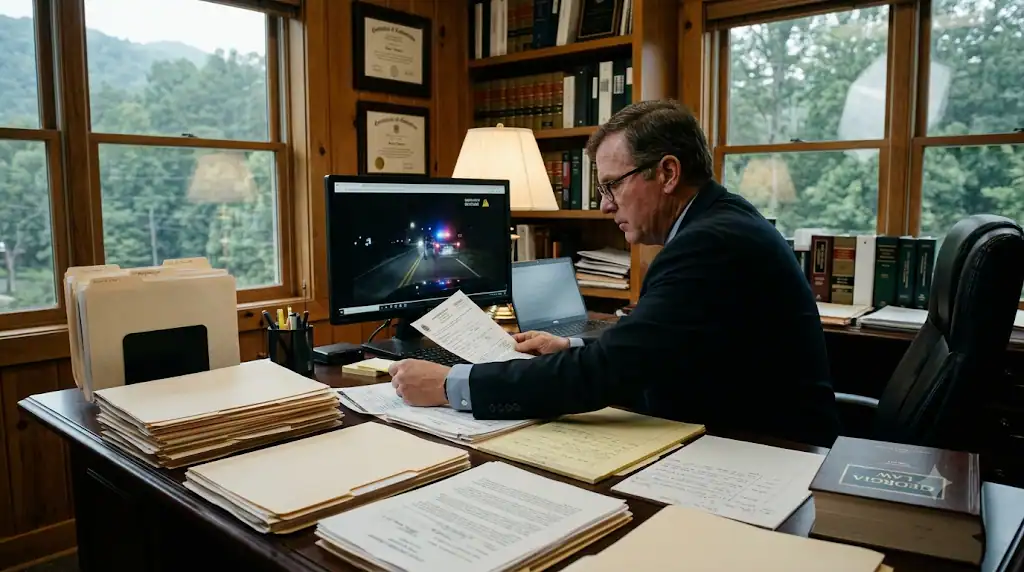
For someone facing these allegations, DUI defense lawyers in Ellijay can examine whether the evidence tells a consistent story or exposes gaps worth challenging. That review can uncover conflicting reports, questionable procedures, unreliable test results, or rights violations that ultimately shape what evidence they can use and how the case proceeds.
Examining the Initial Traffic Stop
A defense begins by asking why the officer stopped the vehicle. Speed, lane position, equipment concerns, or a reported traffic violation must support the stop under applicable law. Dash-camera footage, dispatch records, witness accounts, and the officer’s written report can reveal differences in the stated reason.
The timing also matters. An officer who extends a traffic stop without a lawful basis can create a separate constitutional issue. The defense reviews whether the officer completed the original traffic investigation before beginning a DUI inquiry.
Testing the Officer’s Observations
An officer’s observations can influence the entire case, but observations are not automatically accurate. A lawyer examines lighting, weather, road conditions, traffic, the driver’s clothing, footwear, medical history, and communication barriers.
The defense also compares the report with video evidence. A report might describe severe impairment while footage shows a driver who answered questions, followed instructions, or walked without the described difficulty. For people seeking DUI defense lawyers, this review can include the officer’s notes, body-camera footage, witness statements, and every document created after the stop.
Challenging Field Sobriety Tests
Field sobriety tests require specific conditions and instructions. Uneven pavement, poor lighting, traffic noise, weather, anxiety, injury, balance problems, or unsuitable footwear can affect performance. A defense lawyer checks whether the officer demonstrated each test correctly and explained the instructions clearly.
The lawyer also asks whether the officer treated ordinary movements as signs of impairment. Touching a vehicle for balance, pausing during instructions, or failing to perform a divided-attention task perfectly does not prove intoxication on its own. The full setting must match the conclusion.
Reviewing Breath And Blood Tests
Chemical testing creates several questions beyond the reported result. The defense examines the device, operator, collection method, maintenance records, and test timing. Mouth alcohol, recent eating or drinking, medical conditions, or an improperly administered procedure can affect a breath test result.
Blood testing receives the same scrutiny. The lawyer checks the collection kit, chain of custody, storage, laboratory process, and paperwork. A missing seal, unexplained delay, incomplete record, or inconsistent sample description can weaken the prosecution’s proof.
Investigating Statements And Consent
Statements made during a traffic stop can become evidence. A defense lawyer reviews what the officer asked, how they phrased questions, and whether the driver was free to leave or already under arrest. The timing of warnings and questioning can affect whether a statement is admissible.
Consent also receives close attention. The prosecution must show that consent was voluntary under the circumstances. Pressure, confusing instructions, threats, promises, or a failure to explain the request can support a challenge to evidence obtained after consent.
Testing The Arrest Procedure
An arrest must rest on sufficient facts, not a conclusion formed before the investigation ended. The defense compares the officer’s stated observations with the available video, test results, witness accounts, and timeline.
This phase also includes license consequences that can begin soon after an arrest. A driver should review every notice, receipt, and deadline immediately because administrative proceedings and the criminal case follow separate tracks. The proper response depends on the facts and applicable Georgia procedures.
Preparing Evidence For Court
A courtroom challenge requires more than pointing out minor inconsistencies. The defense connects each problem to a legal issue, such as an unlawful stop, unreliable test, improper questioning, or an incomplete chain of custody. It can then seek to suppress evidence, question witnesses, negotiate from a stronger position, or present those weaknesses at trial.
Preparation includes obtaining reports, recordings, testing records, medical information, and witness details. A driver should avoid deleting messages, discussing the case publicly, or guessing about unclear facts. Accurate records give the defense a better basis for testing the prosecution’s account.
Conclusion
A lawyer builds a DUI defense by examining the evidence in the order it developed, from the stop through testing, arrest, and courtroom presentation. Minor errors can become important when they affect reliability or legal admissibility. After an arrest, gather every document and recording, avoid discussing the facts publicly, and arrange a prompt case review before deadlines affect available options.

