


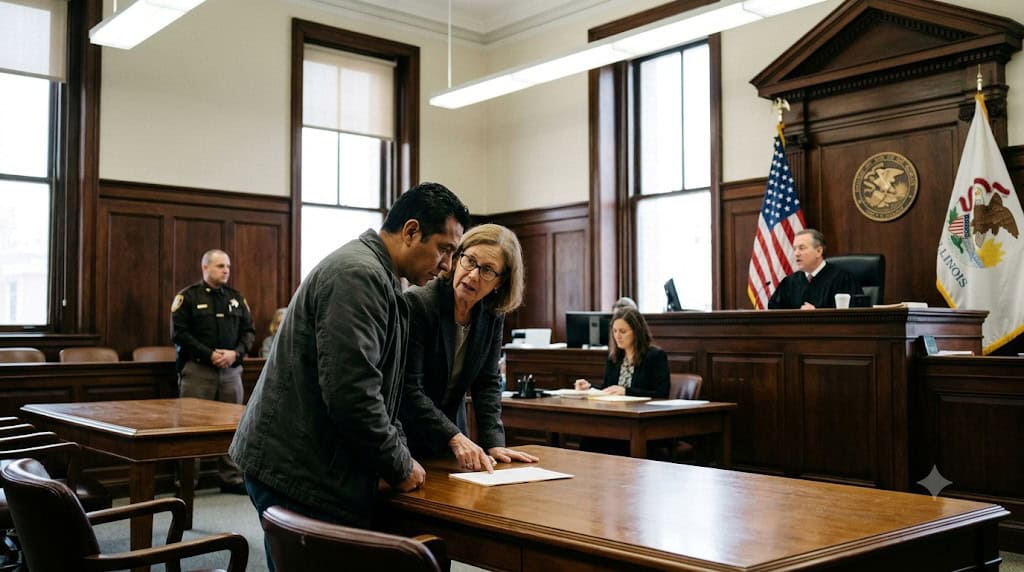
For a non-citizen charged with a crime in Illinois, the most important consequences of a case may never be mentioned in the courtroom where it is decided. A plea that looks like a good deal, such as a short probation term, a reduced charge, or a fine, can still set off immigration consequences that include detention, loss of a green card, denial of naturalization, or removal from the country.
That disconnect is why the plea stage deserves special care. Once a plea is entered and a conviction is on the books, undoing it is far harder than avoiding it in the first place.
Two Systems That Define “Conviction” Differently
Criminal courts and immigration authorities do not always speak the same language, and the word that causes the most confusion is the one that seems simplest of all to define. Federal immigration law has its own definition of a conviction, and it can include outcomes that a state court might not consider a conviction at all. That gap is a big reason practices that handle both criminal defense and immigration matters, such as Hirsch Law Group, tend to look at the two tracks together rather than one at a time. Certain dispositions involving a plea or admission of facts, combined with some form of punishment or restraint, may count for immigration purposes even if the case is later dismissed under state law.
Immigration consequences can also depend on how an offense is categorized: for example, whether it is treated as a crime involving moral turpitude, an aggravated felony, a controlled substance offense, or a domestic violence offense. Those categories have specific federal meanings that do not always match the name of the Illinois charge.
The Constitutional Baseline
In 2010, the U.S. Supreme Court decided *Padilla v. Kentucky*, holding that the Sixth Amendment right to effective counsel requires defense lawyers to advise non-citizen clients about the deportation risks of a guilty plea. When the consequences are clear, the advice must be clear. When the law is uncertain, counsel must at least warn that the plea may carry immigration risks.
This ruling made immigration consequences part of the core plea conversation, not an afterthought.
Illinois Adds Its Own Protection
Illinois also requires judges to give a specific advisement before accepting certain pleas. Under 725 ILCS 5/113-8, before a court accepts a plea of guilty, guilty but mentally ill, or nolo contendere, it must tell the defendant that if they are not a U.S. citizen, the conviction may have consequences such as deportation, exclusion from admission, or denial of naturalization.
If the court fails to give that advisement and the defendant later shows that the plea may have immigration consequences, Illinois law allows the defendant to move to vacate the judgment and withdraw the plea. That motion generally must be brought within two years of the conviction.
The advisement is an important safety net, but it is a general warning. It does not tell a defendant what will actually happen in their specific situation, and it is no substitute for individualized advice.
Questions to Ask Before Entering Any Plea
Anyone who is not a U.S. citizen, including lawful permanent residents, visa holders, DACA recipients, and people without status, should get clear answers to questions like these before agreeing to a plea:
- What exactly is my immigration status today? Status determines which consequences apply.
- How would immigration authorities classify this offense? The answer may differ from the state label.
- Does the sentence length matter? Some consequences turn on the sentence imposed, not just time served.
- Are there alternative pleas with less immigration risk? Sometimes a different charge, statute subsection, or factual basis can change the outcome.
- Would a diversion or supervision program count as a conviction for immigration purposes? Some do; some do not.
- What should the record say? The plea colloquy and written factual basis can matter later.
- Will this affect future travel or naturalization? Even if removal is not immediate, future applications may be affected.
Practical Steps Early in the Case
A few habits help non-citizens protect themselves while the case is pending:
- Tell your defense lawyer your status right away. Lawyers cannot account for risks they do not know about.
- Gather immigration documents. Green cards, visas, prior applications, and any immigration court records.
- Avoid admissions outside of court. Statements to police, probation officers, or others can sometimes be used in immigration proceedings.
- Be cautious with immigration officers. If contacted by federal immigration authorities, speak with counsel before answering questions.
- Do not rush a plea. A quick resolution can create long-term problems.
How plea negotiations generally unfold, and when a plea may or may not make sense, is covered in this broader look at how plea bargains work in criminal cases.
When a Plea Has Already Happened
People sometimes learn about immigration consequences only after a plea, often when they apply to renew a green card, seek citizenship, or return from international travel. Options in that situation are narrower but not necessarily nonexistent. Depending on the facts, possible avenues may include a motion under the advisement statute if the court failed to give the required warning, or post-conviction challenges based on inadequate advice from counsel. These remedies have strict deadlines and technical requirements.
The Core Lesson
In Illinois criminal cases involving non-citizens, the plea is the turning point. The courtroom outcome and the immigration outcome are linked, but they are decided by different systems with different rules. Taking the time to understand both before a plea is entered is one of the most important protections a non-citizen defendant has.
Lawful Permanent Residents Are Not Immune
Many people assume a green card offers full protection from immigration consequences. It does not. Lawful permanent residents can be placed in removal proceedings based on certain convictions, and a conviction can also block a later application for citizenship or cause problems when returning from a trip abroad. Long-term residents with U.S. citizen spouses and children are sometimes the most surprised, because they have lived in Illinois for decades and assume their status is settled. For them, a careful look at the plea may matter more than for anyone else.
Educational information only. Immigration and criminal law both change frequently.

