


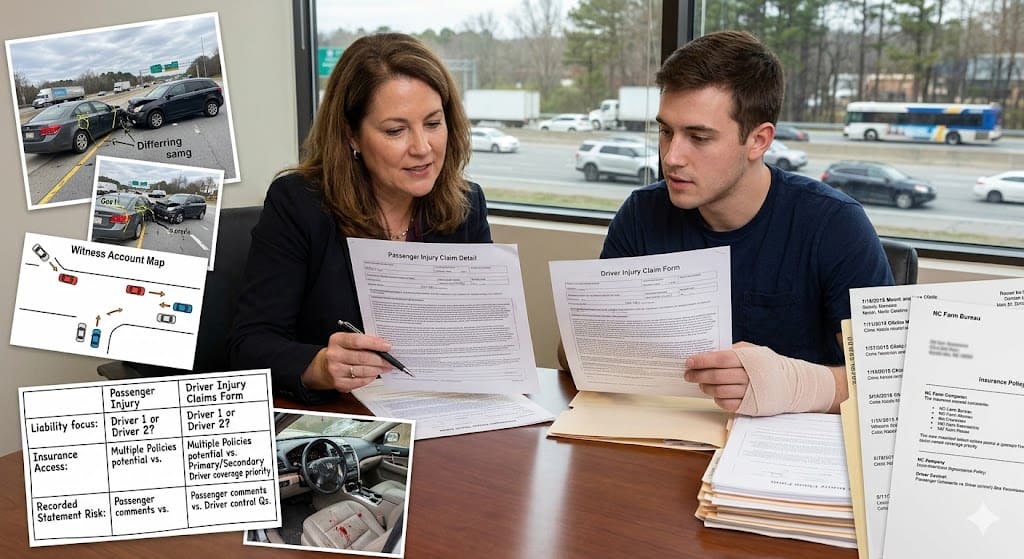
North Carolina’s busy highways, growing cities, and extensive network of local roads see thousands of vehicle trips every day, making traffic accidents an unfortunate reality for many families. When a collision occurs, attention often turns to the drivers involved, but passengers can suffer equally serious injuries and face their own unique legal concerns. Unlike drivers, passengers are rarely responsible for operating the vehicle, which can place them in a different position when questions of liability and compensation arise. Even so, navigating an injury claim is not always straightforward, especially when multiple vehicles, insurance policies, or conflicting accounts of the crash are involved.
Understanding these distinctions is important for anyone seeking financial recovery after being hurt in a collision. The legal and insurance issues surrounding passenger claims often require a careful review of facts that differ from those in driver-related cases. In these situations, experienced car accident lawyers can help injured passengers understand their rights and pursue the compensation they deserve.
Driver Conduct Gets Closer Scrutiny
Driver injury cases usually begin with conduct. Insurers may examine speed, braking distance, lane position, phone records, visibility, and traffic signals. A brief lapse can become central evidence. Passengers rarely face that same level of review. Their behavior may matter only if seat belt use, intoxication, or in-vehicle distraction affects injury severity.
Passengers May Have Multiple Claims
Passengers may have claims against more than one person. One motorist may have failed to yield, while another followed too closely. Each insurer may try to shift blame elsewhere. That dispute can slow payment, especially when medical bills arrive quickly. Still, several policies may create better coverage for surgery, therapy, lost wages, or long-term pain.
Drivers Often Defend Their Own Choices
An injured driver must usually prove that another person caused the collision while addressing personal conduct. That creates pressure on both proof and credibility. Skid marks, vehicle damage, traffic camera footage, and witness accounts can help explain the mechanics of impact. A consistent scene statement matters. Later contradictions may give insurers room to argue shared fault.
Medical Proof Matters
Medical documentation remains central for every injured person. Emergency notes, imaging, orthopedic findings, therapy records, and pain reports connect the crash to tissue damage. Delayed treatment can weaken that link. Insurers may argue that the symptoms arose from aging, work-related strain, or a prior condition. Clear records help show whether swelling, nerve irritation, limited motion, or headaches began after impact.
Insurance Access Can Differ
A passenger may seek payment through the occupied vehicle, the other driver’s liability coverage, or household uninsured motorist protection. An injured driver may depend more on another policy, collision benefits, or underinsured motorist coverage. Priority matters. One limit may not cover ambulance care, diagnostic scans, missed income, rehabilitation, and future treatment.
Recorded Statements Carry Risk
Insurers often request recorded statements soon after a crash. Passengers may be asked about seating position, symptoms, driver behavior, and conversations before impact. Drivers may face questions about speed, perception, and control. Guessing is risky. A casual answer about pain level, timing, or distance can later be used as firm evidence in settlement talks.
Evidence Can Look Different
Passenger evidence often focuses on injury patterns, seating location, restraint use, impact direction, and each driver’s actions. Driver evidence also includes right-of-way rules, traffic control devices, steering input, and following distance. Photos, repair estimates, witness names, and medical timelines all matter. Early documentation can preserve facts before memory fades or vehicles are repaired.
Compensation Categories Are Similar
Both passengers and drivers may seek medical expenses, lost income, pain, emotional distress, and reduced earning capacity. Property damage usually affects drivers more because they own or operate the vehicle. Passengers may still claim broken glasses, phones, medical devices, or personal items. Case value depends on diagnosis, recovery length, impairment, proof quality, and insurance limits.
Conclusion
Passenger and driver injury cases share one purpose: helping an injured person recover after a crash. The path differs because each role affects fault analysis, available coverage, evidence needs, and insurer defenses. Passengers may have several possible claims. Drivers often face closer review of their own decisions. Careful medical documentation, prompt evidence collection, and role-specific planning can protect the claim from avoidable disputes.

