


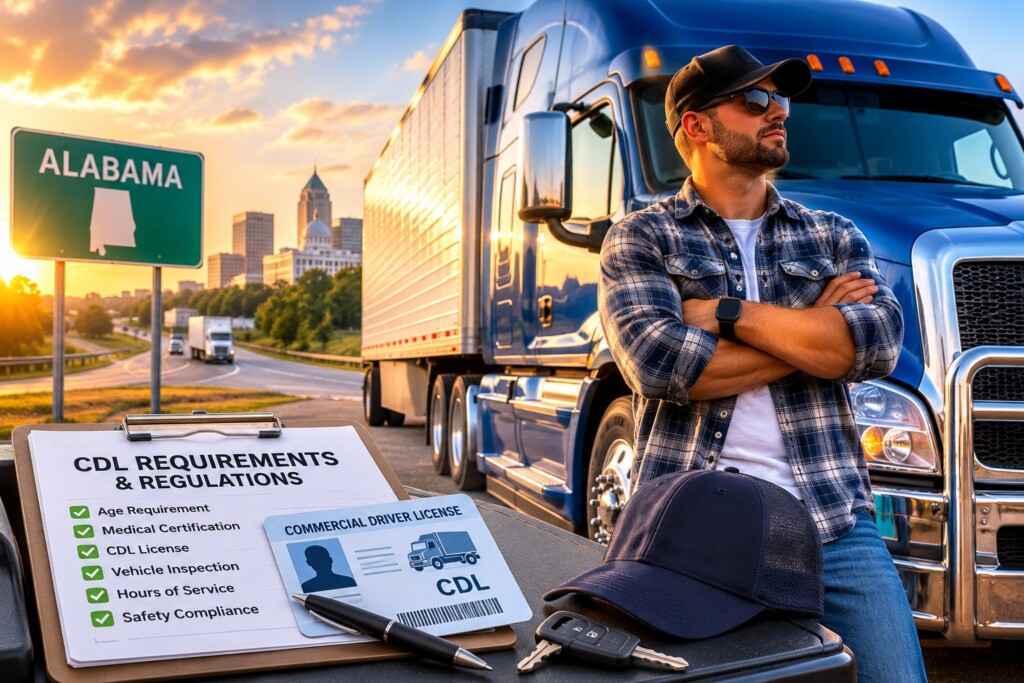
Driving a commercial truck in Alabama requires far more than knowing how to operate a tractor-trailer. Every commercial driver must satisfy federal licensing standards, state regulations, medical fitness requirements, and ongoing compliance obligations before getting behind the wheel. Whether you are planning to begin a trucking career or an employer hiring commercial drivers, understanding these requirements helps prevent costly violations, delays, and legal issues.Alabama follows both state transportation laws and Federal Motor Carrier Safety Administration (FMCSA) regulations, creating a framework designed to improve highway safety while ensuring qualified drivers remain on the road. From obtaining a Commercial Driver’s License (CDL) to maintaining Hours of Service records and passing medical examinations, every requirement plays a role in protecting motorists and commercial carriers alike.
Understanding Alabama’s Commercial Driver Qualification Standards
Commercial trucking begins with meeting strict eligibility standards established under Alabama Trucker Qualifications and Regulations . These standards are intended to ensure that drivers possess the physical ability, knowledge, and judgment required to safely operate large commercial vehicles.
Applicants must generally satisfy age requirements, residency documentation, identity verification, and legal driving status before beginning CDL training. Drivers operating exclusively within Alabama may qualify at a younger age than those transporting freight across state lines, where federal interstate requirements apply.
Every applicant must also demonstrate sufficient English proficiency to read highway signs, understand safety instructions, complete inspection reports, and communicate with law enforcement officials during roadside inspections. These communication standards remain an important part of commercial transportation safety.
Commercial Driver’s License Requirements Every Applicant Must Meet
Obtaining a CDL involves multiple testing stages that evaluate both knowledge and practical driving ability. Alabama requires applicants to complete written examinations before receiving a Commercial Learner’s Permit (CLP), allowing supervised practice before taking the final skills examination.
The licensing process includes vehicle inspections, basic control testing, and an on-road driving examination designed to measure real-world operating ability. Depending on the type of commercial vehicle operated, drivers may also need endorsements covering specialized equipment or cargo.
Applicants typically complete requirements such as:
- Commercial Learner’s Permit (CLP)
- General knowledge examination
- Air brake testing
- Combination vehicle testing
- Road skills examination
- Vehicle inspection demonstration
- Required endorsements when applicable
Successfully completing each stage confirms that drivers understand both vehicle operation and transportation safety responsibilities before receiving a CDL.
Medical Certification Plays a Critical Role in Driver Eligibility
Physical health directly affects highway safety, making medical certification one of the most important qualification requirements. Most interstate commercial drivers must pass examinations conducted by certified medical examiners listed in the National Registry of Certified Medical Examiners.Medical evaluations assess vision, hearing, blood pressure, cardiovascular health, neurological conditions, respiratory function, diabetes management, and other medical factors that may affect safe vehicle operation.
Drivers who fail to meet required medical standards may need additional evaluations, treatment, or medical exemptions before qualifying.Keeping medical certification current remains an ongoing responsibility. Allowing certification to expire can result in CDL downgrades or temporary disqualification from commercial driving until compliance is restored.
Background Screening and Driving History Matter
A driver’s record provides employers and regulators with valuable insight into safety habits and legal compliance. Alabama trucking employers frequently review Motor Vehicle Records (MVRs) before hiring commercial drivers, while federal regulations require carriers to monitor driving histories regularly.
Serious traffic violations, repeated moving offenses, reckless driving convictions, license suspensions, or DUI-related incidents may significantly affect employment opportunities or licensing eligibility. Drivers transporting hazardous materials often undergo additional federal security screening before receiving required endorsements.
Hours of Service Rules Protect Drivers and the Public
Fatigue remains one of the leading safety concerns within commercial transportation. Hours of Service regulations establish driving limits that help reduce exhaustion-related crashes while promoting responsible scheduling practices.
Commercial drivers must accurately record driving time, off-duty periods, and required rest breaks using approved electronic logging devices when applicable. Carriers also share responsibility for ensuring drivers comply with federal scheduling requirements rather than encouraging violations.Ignoring fatigue regulations may lead to significant penalties, roadside out-of-service orders, employer investigations, and increased liability following accidents.
Vehicle Inspection Requirements Support Safer Commercial Operations
Every commercial driver in Alabama is responsible for inspecting the vehicle before and after each trip. These inspections help identify mechanical problems before they become safety hazards on the highway. A thorough inspection includes checking the brakes, steering system, tires, lights, mirrors, suspension, coupling devices, and emergency equipment. Detecting issues early reduces the likelihood of breakdowns and serious accidents.
Federal regulations also require carriers to maintain inspection and maintenance records for commercial vehicles. Drivers who knowingly operate unsafe equipment may face citations, out-of-service orders, or disciplinary action from their employer. Consistent inspections not only improve compliance but also extend vehicle life and reduce repair costs over time.
Common Reasons Alabama Truck Drivers Lose Their CDL Privileges
Commercial driving privileges can be suspended or revoked when drivers commit serious violations or fail to meet regulatory requirements. Some violations result in temporary disqualification, while others may permanently affect a trucking career depending on the severity and frequency of the offense.
Common reasons for CDL disqualification include:
- Driving under the influence of alcohol or controlled substances
- Refusing a required chemical test
- Leaving the scene of an accident
- Using a commercial vehicle while committing certain felony offenses
- Excessive speeding or reckless driving
- Falsifying logbooks or inspection reports
- Operating without a valid medical certificate
- Violating Out-of-Service Orders
Professional drivers who understand these risks are more likely to maintain compliance and protect both their careers and public safety.
Employer Responsibilities Under Alabama and Federal Regulations
Trucking companies share legal responsibility for maintaining a compliant workforce. Before hiring a commercial driver, employers must verify licensing status, review driving records, confirm medical certification, and maintain qualification files required under FMCSA regulations. Hiring an unqualified driver can expose carriers to substantial financial liability if an accident occurs.
Carriers must also provide ongoing safety training, monitor Hours of Service compliance, conduct regular drug and alcohol testing where required, and maintain vehicle maintenance programs. Strong compliance systems not only reduce regulatory violations but also improve safety ratings, insurance eligibility, and business reputation.
Why Legal Guidance Matters After Regulatory Violations or Trucking Accidents
Truck drivers and motor carriers may face investigations following serious accidents, roadside inspections, or alleged regulatory violations. Legal issues often involve multiple parties, including insurance companies, employers, government investigators, and injured individuals. Understanding both Alabama law and federal transportation regulations becomes critical when responding to these situations.
An experienced transportation attorney can evaluate licensing issues, regulatory compliance, accident liability, employer responsibilities, and insurance disputes. Early legal guidance may help preserve evidence, protect legal rights, and reduce the long-term consequences of enforcement actions or civil litigation.
Conclusion
Building a successful trucking career in Alabama requires more than earning a Commercial Driver’s License. Drivers must continually comply with federal safety standards, maintain medical certification, follow Hours of Service rules, perform vehicle inspections, and protect their driving records. Employers also play an essential role by hiring qualified drivers, maintaining accurate records, and enforcing safety programs that meet both state and federal requirements.
Understanding Alabama trucker qualifications and regulations allows drivers and carriers to avoid unnecessary penalties while operating safely and professionally. Staying informed about changing transportation laws, investing in continuous training, and maintaining full regulatory compliance creates a safer highway system and supports long-term success within the commercial trucking industry.

