


The Importance of Legal Services and Advocacy in Personal Injury
Navigating the aftermath of a personal injury, especially one sustained at work, involves a complex web of legal, medical, and financial challenges. Understanding the nuances of workers’ compensation and personal injury law is paramount to securing the benefits and justice you deserve. While both categories involve injuries, they operate under distinct legal frameworks. Personal injury claims typically focus on establishing fault or negligence on the part of another party, allowing for a broader range of damages, including pain and suffering. Workers’ compensation, on the other hand, is generally a no-fault system, meaning benefits are provided regardless of who was at fault for the injury, but the types of benefits are typically more limited.
Workers’ compensation is a state-mandated insurance program that provides medical care and wage-replacement benefits to employees who suffer job-related injuries or illnesses. Eligibility for workers’ comp usually extends to most employees, whether full-time, part-time, or seasonal, as long as their injury or illness arose “out of and in the course of employment.” This broad coverage ensures a safety net for workers, but the specifics can vary significantly by state. For instance, some states might exclude certain types of workers, like independent contractors or domestic workers, or small businesses might be exempt from carrying insurance if they have very few employees. It’s crucial for injured workers to understand these eligibility criteria, as they form the foundation of any successful claim.
When facing such intricate legal landscapes, the value of Caputo Mariotti workers’ comp legal advocacy cannot be overstated. Bar association resources, such as those provided by state bar associations and injured workers’ bar associations, offer valuable guidance and directories to connect individuals with qualified legal professionals. These resources often highlight that not all legal representatives are attorneys; some states license non-attorneys to represent claimants after they pass specific examinations on workers’ compensation law. Regardless of whether you seek an attorney or a licensed representative, ensuring they are well-versed in the specific laws of your state is critical. The complexities of establishing eligibility, proving the work-relatedness of an injury, and navigating bureaucratic procedures often necessitate expert intervention.
When to Seek Professional Legal Services and Advocacy
While some minor workplace injuries might seem straightforward, there are numerous situations in which engaging a workers’ compensation attorney is not just advisable but essential. The workers’ compensation system, while designed to protect injured workers, can often feel adversarial, with insurance companies and employers frequently challenging claims.
One of the most common triggers for seeking legal help is a claim denial. Insurance companies routinely deny claims, sometimes for seemingly minor procedural errors or due to disputes over the work-relatedness or severity of an injury. Without legal representation, appealing these denials can be a daunting and often unsuccessful endeavor. An attorney can help you understand the reasons for the denial, gather necessary evidence, and file a compelling appeal. We understand that navigating workers’ compensation challenges, such as denied claims and benefit disputes, requires a strategic and informed approach.
Employer retaliation is another serious concern. Despite legal protections, some employers may subtly or overtly retaliate against workers who file claims by demoting them, reducing their hours, or even terminating them. A lawyer can protect your rights, document instances of retaliation, and pursue additional legal action if necessary.
Cases involving permanent disability or complex litigation inherently require legal expertise. If your injury results in long-term impairment, affects your ability to return to your previous job, or necessitates extensive future medical care, an attorney can ensure that your settlement or award adequately accounts for these long-term impacts. They can also help navigate the intersection of workers’ compensation with other benefits, such as Social Security Disability, ensuring that one doesn’t inadvertently reduce the other.
Furthermore, pre-existing conditions can significantly complicate a claim. While workers’ compensation generally covers the aggravation of a pre-existing condition if it was worsened by a work-related incident, proving this link often requires robust medical evidence and skilled legal argumentation.
Finally, the risks of self-representation are substantial. Without an attorney, injured workers are often at a disadvantage against experienced insurance adjusters and defense attorneys whose primary goal is to minimize payouts. These professionals are well-versed in legal loopholes, negotiation tactics, and the intricate procedural rules of the workers’ compensation system. They may offer low-ball settlements, pressure you into accepting less than you deserve, or deny valid claims, expecting you to give up. An attorney acts as your advocate, leveling the playing field and ensuring your rights are protected throughout the entire process.
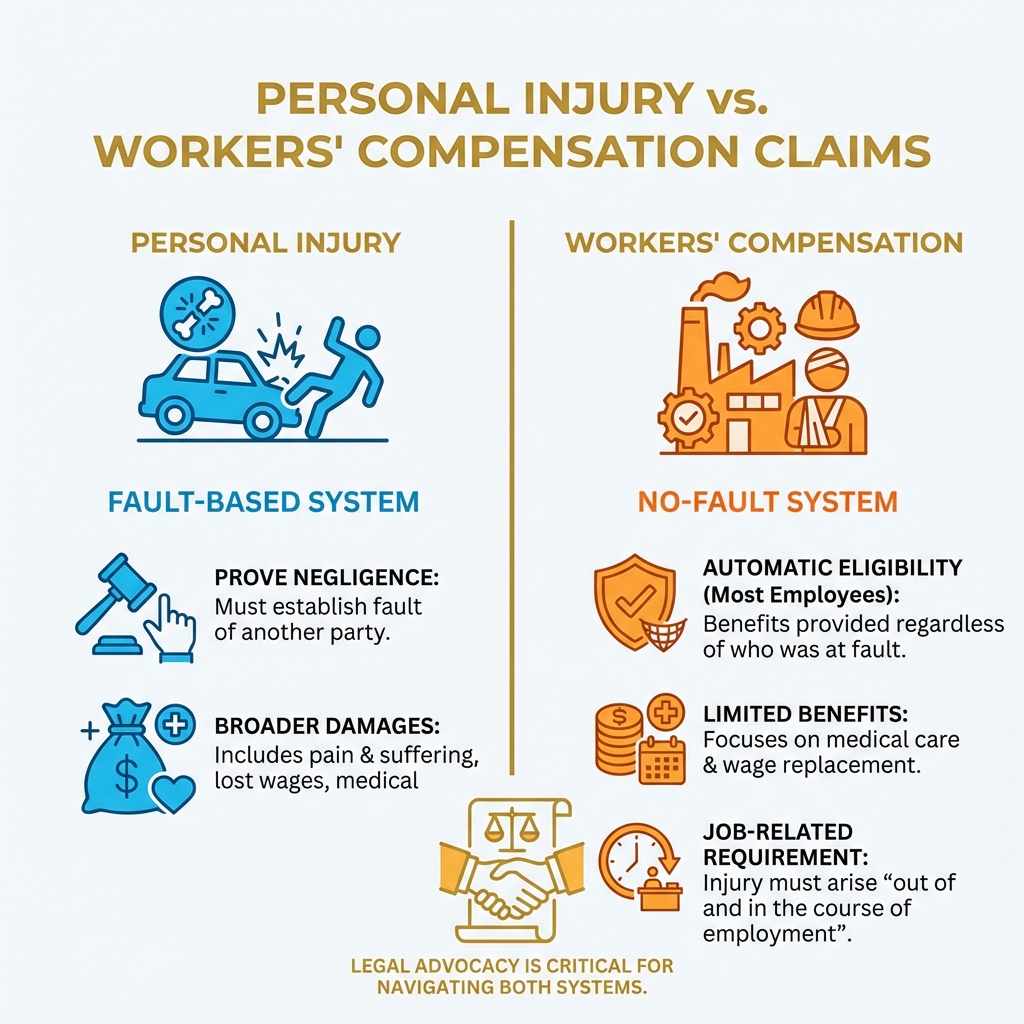
An infographic illustrating the key differences between personal injury and workers’ compensation claims.
The Critical Role of a Workers’ Compensation Lawyer in Workplace Injuries
When a workplace injury occurs, the immediate aftermath can be chaotic and confusing. Beyond the physical pain and emotional distress, injured workers face a labyrinthine administrative process that can be difficult to navigate alone. This is where a dedicated workers’ compensation lawyer becomes an invaluable ally. Their role extends far beyond simply filling out forms; they are your advocate, strategist, and guide through every stage of your claim.
A primary function of a workers’ compensation attorney is to ensure you receive all the benefits you are entitled to. This includes not just medical coverage for your treatment, but also wage loss benefits that compensate for lost income during your recovery. In many states, these benefits typically cover a percentage of your average weekly wages, often around two-thirds. Lawyers are adept at calculating these benefits accurately, ensuring that all aspects of your lost earning capacity are taken into account. They also ensure that your medical treatment is authorized and paid for, challenging any denials of necessary care by the insurance carrier.
Beyond direct medical and wage benefits, an attorney can help secure vocational rehabilitation services if your injury prevents you from returning to your previous job. These services can include job placement assistance, retraining, or education to help you find suitable alternative employment. In the tragic event of a work-related fatality, lawyers can assist families in filing for death benefits, which typically cover funeral expenses and provide ongoing financial support to dependents.
The procedural aspects of workers’ compensation claims are riddled with strict deadlines, and missing even one can jeopardize your entire claim. For instance, in many jurisdictions, there’s a 120-day notice period to inform your employer of an injury, and a 3-year filing window for the actual claim. An attorney ensures these critical deadlines are met, handling all necessary paperwork and communications with your employer, the insurance company, and the workers’ compensation board.
A significant part of a lawyer’s work involves challenging the tactics employed by insurance adjusters. These adjusters are often trained to minimize payouts, and they may try to downplay your injuries, question the work-relatedness of your condition, or pressure you into accepting a low settlement. An attorney acts as a buffer, negotiating on your behalf and protecting you from unfair practices. They are skilled in the appeal processes necessary when claims are initially denied or benefits are prematurely terminated. We believe in empowering workers through legal rights, ensuring they understand their entitlements and have strong representation.

Strengthening Claims Through Medical Evidence and Litigation Strategy
In workers’ compensation claims, medical evidence is the cornerstone of a successful outcome. Without clear, consistent, and compelling medical documentation, even the most legitimate injury can be challenged or denied. This is where an experienced workers’ compensation attorney truly shines, leveraging their expertise to strengthen your claim through meticulous evidence gathering and strategic litigation.
The attorney’s role begins by ensuring that you receive proper medical evaluations from qualified healthcare professionals. They work to gather all relevant medical records, including diagnostic test results (X-rays, MRIs, CT scans), treatment notes, surgical reports, and physicians’ opinions. These documents are crucial for establishing the nature and extent of your injuries, their direct link to your work activities, and the prognosis for your recovery.
A key aspect of this process is obtaining strong opinions from treating physicians. Your attorney will communicate with your doctors to ensure they provide detailed reports that clearly articulate the work-related causation of your injury, your current limitations, and your future medical needs. They can also arrange for specialized evaluations or second opinions if necessary. We understand the role of medical evaluations in claims and how to best present them to support your case.
Insurance companies often request independent medical exams (IMEs) performed by doctors they choose. These exams can sometimes be biased against the injured worker. Your attorney can prepare you for these exams, challenge unfavorable IME reports, and ensure that your own medical evidence is robust enough to counteract any negative findings.
Beyond medical reports, an attorney may utilize expert testimony from various specialists. This could include vocational experts who can assess your ability to return to work and the impact of your injury on your earning capacity, or medical experts who can provide in-depth analysis of complex conditions. They also handle deposition handling, preparing you for questioning and cross-examining opposing witnesses, including employer representatives and their medical experts.
For claims involving occupational diseases, such as carpal tunnel syndrome, asbestos-related illnesses, or hearing loss, the link between the condition and the workplace can be less obvious than with an acute injury. Here, evidence gathering becomes even more critical, often requiring historical exposure data, expert medical opinions on causation, and detailed work histories. An attorney specializing in these cases is adept at navigating occupational disease claims, understanding the specific challenges and evidence requirements unique to these types of injuries. By meticulously building a comprehensive medical and factual record, your attorney significantly increases the likelihood of a favorable outcome for your workers’ compensation claim.

Navigating Complex Settlements and Third-Party Liability
Reaching a fair resolution in a workers’ compensation case often involves complex settlement negotiations, and in some instances, pursuing claims against parties other than your employer. An experienced attorney is crucial in navigating these intricate pathways to maximize your recovery.
While workers’ compensation is generally an “exclusive remedy” against your employer—meaning you cannot sue your employer for pain and suffering in most cases—there are important exceptions. If a third party contributed to your injury, you might have grounds for a separate personal injury lawsuit. This could involve a negligent driver who caused an accident while you were on the job, a manufacturer of faulty equipment that led to your injury (known as product liability), or a property owner whose unsafe premises caused your fall. These third-party claims can be particularly valuable because they allow recovery of non-economic damages, such as pain and suffering, which are typically not covered by workers’ compensation. An attorney can help you determine how much your injury claim is worth in such scenarios and pursue all available avenues for compensation. For instance, if you were injured by heavy equipment, understanding your rights and the potential for third-party claims is vital.
Another critical area where legal expertise is indispensable is in understanding how your workers’ compensation settlement might interact with other benefits. For example, if you are also receiving Social Security Disability benefits, your workers’ comp settlement could lead to Social Security disability offsets, reducing your SSDI payments. An attorney can structure your settlement to minimize or avoid these offsets, ensuring you retain as much of your benefits as possible. Similarly, if your injury requires ongoing medical care, your settlement might need to account for Medicare Set-Asides (MSAs), which reserve a portion of the settlement for future medical expenses to protect Medicare’s interests.
In rare cases, employer misconduct might allow you to step outside the exclusive remedy rule and pursue a direct lawsuit against your employer. This typically applies to situations where the employer intentionally caused the injury or acted with gross negligence, though the specific criteria vary by state. Identifying such instances requires a deep understanding of workers’ compensation law and personal injury law.
Maximizing Recovery through Legal Services and Advocacy
The ultimate goal in most workers’ compensation cases is to achieve a fair settlement that adequately compensates you for your losses. This involves intricate settlement negotiation with the insurance company, which often attempts to undervalue claims. Your attorney will leverage all the gathered medical evidence, expert opinions, and legal precedents to argue for the highest possible compensation. They will assess not only your immediate medical costs and lost wages but also potential future medical expenses, vocational rehabilitation needs, and the impact of your injury on your long-term earning capacity.
Settlements can take various forms, including lump sum agreements or structured payments. Your attorney will advise you on the best option for your specific circumstances, taking into account tax implications and your financial needs. Crucially, workers’ compensation settlements often require judicial approval to ensure they are fair and in the injured worker’s best interest. Your attorney will guide you through this process, ensuring all legal requirements are met.
Achieving fair valuation of your claim requires a comprehensive understanding of all potential benefits, including temporary and permanent disability, specific loss benefits, and disfigurement awards. The process also involves careful benefit coordination to avoid reductions from other sources. By meticulously calculating all damages and skillfully negotiating, a dedicated attorney ensures that your settlement provides genuine long-term financial security and allows you to focus on your recovery without undue financial stress.
Frequently Asked Questions about Injury Litigation
We understand that injury litigation can be daunting, filled with unfamiliar terms and complex procedures. To help clarify some common concerns, we’ve addressed several frequently asked questions about workers’ compensation and personal injury claims.
What should I do immediately after a work injury to protect my claim?
Immediate actions after a work injury are critical for protecting your claim. First and foremost, seek medical attention promptly, even if you think your injury is minor. Delaying medical care can be used by the insurance company to argue that your injury wasn’t severe or wasn’t work-related. Be sure to tell the medical provider that your injury occurred at work.
Next, notify your employer of the injury as soon as possible. Most states have strict deadlines for reporting, often within days or weeks. For instance, in Pennsylvania, you generally have 120 days to notify your employer, but it’s best to do it within the 21-day notification rule to ensure immediate benefits. Provide written notice if possible, and keep a copy for your records. We have resources available to guide you on what to do if you are hurt at work.
Document evidence related to your injury. This includes taking photos of the accident scene, your injuries, and any defective equipment. Get contact information from any witnesses. Keep a detailed log of your symptoms, medical appointments, and how the injury affects your daily life.
Finally, file a claim petition with the appropriate workers’ compensation board. Your employer or their insurance carrier should provide you with the necessary forms. While you can initiate this process yourself, consulting with an attorney at this stage can help ensure all steps are followed correctly and deadlines are met.
How much does a workers’ compensation attorney cost, and how are fees regulated?
One of the primary concerns for injured workers is the cost of legal representation. Fortunately, workers’ compensation attorneys almost universally work on a contingency fee basis. This means you pay no upfront costs, and your attorney only gets paid if they successfully secure benefits or a settlement for you. If your claim is unsuccessful, you typically owe nothing for legal fees.
Attorney fees in workers’ compensation cases are also highly regulated. Most states impose a cap on contingency fees, typically ranging from 10 to 20 percent of the benefits or settlement recovered. For example, many states cap fees at 10% to 20% of the benefits obtained. This percentage is usually calculated after medical expenses have been paid.
Crucially, these fees are almost always subject to judicial approval by the workers’ compensation board or commission. This oversight ensures that the fees are reasonable and fair, preventing attorneys from overcharging injured workers. In many cases, the attorney’s fees are paid directly by the insurance carrier from the awarded compensation, rather than coming out of your pocket directly. This system makes legal representation accessible to all injured workers, regardless of their financial situation. Most attorneys also offer free initial consultations, allowing you to discuss your case and understand your options without any financial commitment.
How long does the workers’ compensation process take from claim to resolution?
The duration of a workers’ compensation claim can vary significantly depending on the case’s complexity, the severity of the injury, and whether the claim is disputed. There isn’t a single answer, but we can outline typical timelines.
After reporting your injury and filing a claim petition, the insurance carrier typically has a period (e.g., 21 days in some states) to investigate and either accept or deny the claim. If the claim is accepted, and the injury is minor with clear medical treatment, benefits might begin relatively quickly, and the case could resolve within a few months. Some states even have a 7-day compensation agreement period where the employer and employee can agree on benefits.
However, if the claim is denied or if there are disputes over medical treatment, the extent of the injury, or the ability to return to work, the process can become much longer, entering into a formal litigation process. This involves hearings, depositions, and potentially appeals, which can extend the process for several months to a year or even longer. Appeal windows are also strict, requiring prompt action if a decision goes against you.
The timing of the settlement also plays a role. Some cases settle early in the process, while others may only settle after extensive litigation or once the injured worker has reached maximum medical improvement (MMI), meaning their condition is stable, and no further significant improvement is expected. Medical improvement milestones are often key points for evaluating a potential settlement.
While some straightforward claims can be resolved within a few months, complex or disputed cases can take a year or more to reach a final resolution. Having an attorney can help streamline the process by managing deadlines, negotiating effectively, and navigating the legal system efficiently. For a more detailed look at the journey, consider resources on navigating claims from filing to resolution.
Conclusion
The path through personal injury, particularly when it involves a workplace incident, is rarely straightforward. From understanding your eligibility for workers’ compensation benefits to navigating complex legal procedures and ensuring fair settlements, the journey is fraught with potential pitfalls. The insights shared in this guide underscore the profound value of experienced legal representation.
An attorney specializing in workers’ compensation acts as your essential guide and advocate, ensuring that your rights are protected, deadlines are met, and your claim is strengthened by robust medical evidence. They are instrumental in challenging claim denials, combating employer retaliation, and securing comprehensive benefits that cover not just immediate medical needs and lost wages, but also long-term care and vocational rehabilitation.
By understanding when to seek professional help—especially in denied-claim cases, permanent disability, or third-party involvement—and knowing what to expect regarding legal costs and processes, you empower yourself to make informed decisions. The goal is always to achieve a resolution that provides genuine financial security and allows you to focus on your recovery.
When facing the aftermath of a work injury, you don’t have to navigate the complexities alone. Professional legal protection and advocacy are available to help you achieve your recovery goals and secure the justice you deserve. Making the right choice in legal representation can significantly impact your future well-being, ensuring that your voice is heard and your interests are vigorously defended.

