
Motor vehicle collisions occur unexpectedly across provincial highways, major commuter corridors, and municipal streets every single day, leaving drivers, passengers, cyclists, and pedestrians facing severe physical injuries and overwhelming emotional trauma. Navigating the immediate aftermath of a serious crash involves addressing complex emergency medical care, physical rehabilitation regimens, extensive vehicle property damage, and significant household financial disruptions. In Ontario, managing these issues is governed by a distinct and highly intricate auto insurance framework. Understanding how the province balances mandatory statutory protections with civil common-law liability is vital for anyone pursuing complete financial recovery and long-term healthcare support.
Ontario’s Hybrid Auto Insurance Framework Explained
Ontario utilizes a comprehensive hybrid automobile insurance system that combines statutory no-fault accident benefits with the traditional right to sue negligent parties in civil court. This dual structure ensures that immediate baseline medical, rehabilitation, and income assistance is available swiftly following an incident, while preserving legal avenues to recover substantial damages when another driver’s carelessness, speeding, distracted driving, or reckless behavior caused the collision.
Regardless of whether an accident occurred on a busy multi-lane highway, a rural regional road, or an urban intersection, understanding the distinct operational boundaries between no-fault benefits and tort litigation is crucial for maximizing your overall compensation and legal protection.
Statutory Accident Benefits Schedule (SABS): Immediate No-Fault Relief
Under the Statutory Accident Benefits Schedule (SABS), every person injured in a motor vehicle collision in Ontario has access to essential accident benefits through their own auto insurer, or through the insurer of another vehicle involved if they do not own an insured vehicle. Because SABS operates on a strict no-fault basis, these benefits are accessible regardless of who caused the collision.
The standard SABS framework provides several crucial categories of mandatory coverage:
- Medical and Rehabilitation Benefits: Covers specialized physiotherapy, chiropractic treatments, occupational therapy, psychological counseling, assistive medical devices, and prescription medications not covered under the Ontario Health Insurance Plan (OHIP). Funding limits vary depending on whether injuries fall under the Minor Injury Guideline (MIG), non-catastrophic designations, or catastrophic impairment levels.
- Income Replacement Benefits (IRB): Replaces a substantial portion of lost employment income if you are unable to perform the essential tasks of your job, typically paying up to 70 percent of gross income up to a standard weekly statutory maximum.
- Non-Earner and Caregiver Benefits: Provides critical financial relief for full-time students, retired individuals, or primary caregivers of dependent children who suffer catastrophic injuries.
- Attendant Care Benefits: Reimburses the costs of hiring qualified professional aides or healthcare attendants to assist with personal care, hygiene, and daily living activities.
Tort Claims: Pursuing Damages Against At-Fault Drivers
While SABS provides immediate relief, it rarely covers the full scope of financial and personal losses resulting from severe injuries. To recover comprehensive damages, injured victims can initiate a civil tort lawsuit against the at-fault driver. A tort action allows claimants to seek non-pecuniary general damages for pain, suffering, and loss of enjoyment of life, alongside claims for past and future income loss, loss of competitive earning capacity, and future healthcare costs exceeding standard statutory limits.
However, Ontario law imposes rigorous statutory hurdles on tort actions. To qualify for general damages, the claimant’s injuries must satisfy a statutory “threshold” test—demonstrating a permanent and serious impairment of an important physical, mental, or psychological function. Furthermore, non-catastrophic general damages are subject to a statutory financial deductible that adjusts annually with inflation. Navigating Ontario car accident claims effectively requires robust evidence compilation, independent medical assessments, and experienced legal advocacy to overcome insurer threshold disputes, ensure compliance with strict limitation deadlines, and recover full compensation.
Securing Dedicated Legal Advocacy for Complete Recovery
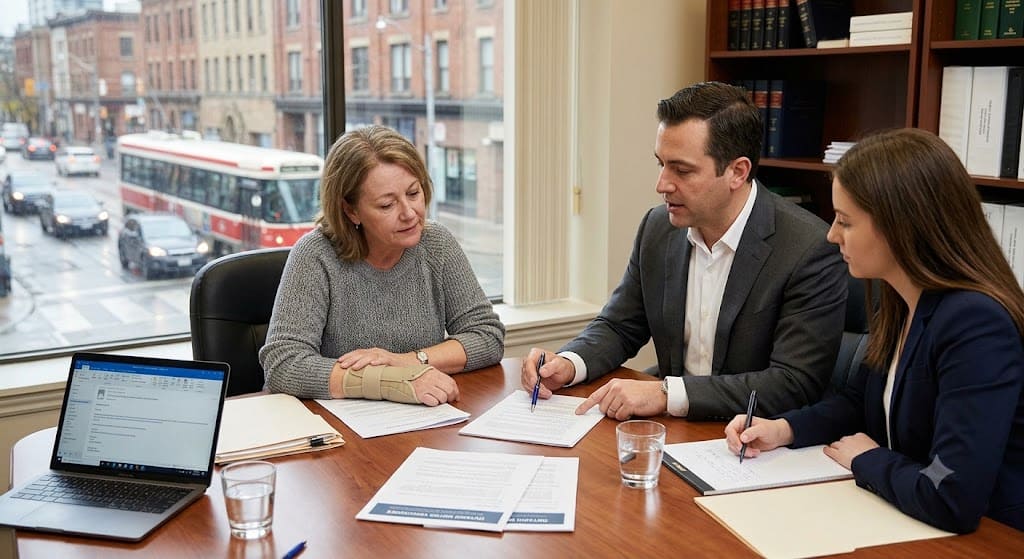
Dealing with dual insurance claims while focusing on physical rehabilitation can be deeply overwhelming. Experienced personal injury advocates handle complex negotiations, coordinate multi-disciplinary medical assessments, and ensure your rights are protected against aggressive insurer tactics throughout the entire legal process.

