


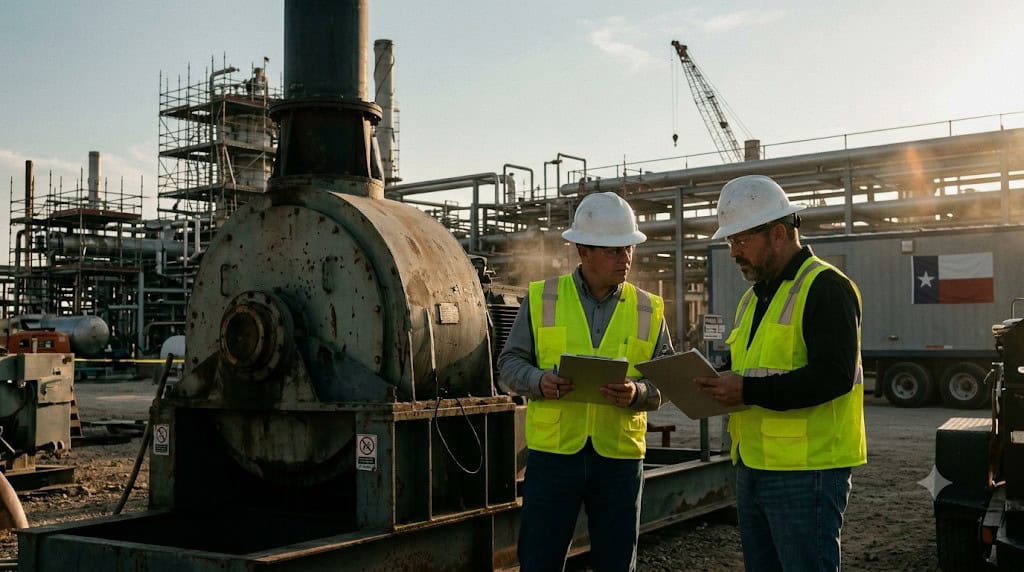
Texas is unusual among American states in that private employers are not required to carry workers’ compensation insurance. Many do, and for those that do, a significant legal shield comes with it. In most cases, workers’ compensation benefits become the exclusive remedy for workplace injuries and deaths, meaning families generally cannot file a traditional lawsuit against the employer.
There is, however, an important exception that often goes overlooked. When a worker dies because of an employer’s intentional act or gross negligence, certain family members may pursue additional damages even if the employer is a subscriber to the workers’ comp system. Understanding that exception can matter enormously for families coping with a sudden loss on a job site, in a refinery, or on the road.
The General Rule: Comp Is Exclusive
Under Texas Labor Code section 408.001, when an employer carries workers’ compensation coverage, recovery of benefits is the exclusive remedy against that employer or its agents and employees for a work-related injury or death.
The trade-off is intentional. Injured workers and their families receive benefits without having to prove fault, and employers receive protection from most negligence lawsuits. Death benefits typically include a portion of the worker’s wages paid to eligible beneficiaries and funeral expense coverage.
For many families, though, those benefits do not reflect the full scope of what was lost, particularly when the death resulted from conduct that went well beyond an ordinary mistake.
The Exception Built Into the Statute
Section 408.001 itself contains the exception. Under subsection (b), two groups keep a path to exemplary damages despite the exclusive remedy rule: the worker’s surviving spouse and the worker’s heirs of the body. That path opens only when the employer’s gross negligence, or an intentional act or omission by the employer, caused the death.
A few points about this exception deserve emphasis:
- It applies to deaths, not injuries. Workers who survive serious injuries generally cannot use this provision.
- It is limited to certain family members. The statute refers to the surviving spouse and heirs of the body, which generally means children and other direct descendants.
- It covers exemplary damages. These are damages meant to punish and deter, sometimes called punitive damages, rather than to compensate for ordinary losses.
What “Gross Negligence” Means Here
Gross negligence is not the same as carelessness. The Labor Code points to the definition in Chapter 41 of the state’s remedies code, and that definition has two parts that must both be met:
- An extreme risk, judged from the employer’s position at the time. Looking at the act or omission objectively, from where the employer stood when it happened, it carried an extreme degree of risk once both the likelihood and the severity of potential harm to others are considered.
- Actual awareness and conscious indifference. The employer really knew about that risk, yet went ahead anyway with conscious indifference to the rights, safety, or welfare of others.
Separately, the same chapter also expressly requires clear and convincing evidence of gross negligence before exemplary damages can be awarded, which is a higher bar than in an ordinary injury case, and it cannot be met with proof of ordinary negligence or simple bad judgment standing alone.
Families exploring whether this path might apply often speak with a Texas wrongful death lawyer because the evidence needed is specific and demanding.
Evidence that can support these elements may include prior safety complaints that were ignored, internal reports identifying a hazard, repeated regulatory citations, disabled safety equipment, or pressure to meet production goals despite known dangers.
Non-Subscriber Employers Are a Different Story
Because Texas allows employers to opt out of workers’ compensation, some workplace deaths involve non-subscribing employers. In those cases, the exclusive remedy bar does not apply in the same way, and families may be able to pursue a wrongful death claim based on the employer’s negligence, which they still have to prove. Under Labor Code section 406.033, a non-subscriber sued over a worker’s death cannot argue that the worker was contributorily negligent, assumed the risk, or was hurt by a co-worker’s negligence. Two arguments do remain open to the company: that the injury was something the worker meant to cause, or that intoxication brought it about.
Determining whether an employer was a subscriber at the time of the incident is therefore one of the first questions to answer.
Third Parties Remain Fair Game
Even when the employer is protected, other parties are not. Workplace deaths often involve companies other than the direct employer:
- General contractors and subcontractors on construction sites
- Equipment and machinery manufacturers whose products failed
- Property owners who controlled the premises
- Drivers and trucking companies in road-related deaths
Claims against these third parties follow Texas wrongful death law, under which a spouse, children, and parents hold the claim. When none of those relatives has sued roughly three months after the loss, the estate’s representative is expected to step in, unless every one of them asks it not to.
This look at how workplace injury recovery may involve multiple legal claims explains how comp benefits and third-party claims can run side by side.
Evidence Families Should Try to Preserve
In workplace death cases, critical evidence is often in the employer’s hands. Families and their representatives commonly seek:
- Incident reports and internal investigation findings
- OSHA inspection files and citations
- Safety training records
- Equipment maintenance and inspection logs
- Photos and video from the scene
- Names of coworkers who witnessed the event
Federal rules require employers to report a work-related death to OSHA within eight hours (29 CFR 1904.39), and the reports and any follow-up inspection can later become important in civil proceedings.
Weighing the Options
Every workplace death case raises a set of threshold questions: Was the employer a subscriber? Were third parties involved? Is there evidence of conscious indifference to an extreme risk? Who are the eligible family members? The answers determine which claims exist and against whom.
Texas law sets a high bar for overcoming the exclusive remedy rule, and it should. But that bar is not insurmountable when an employer knowingly put workers in extreme danger. For families who lost someone in that kind of situation, the exception in section 408.001(b) can provide a path to accountability that workers’ compensation alone does not.
The Timing Problem
Workplace death cases often involve several overlapping clocks. A claim for death benefits goes to the Texas Division of Workers’ Compensation, which runs its own schedule of deadlines. Civil claims against third parties or for exemplary damages have separate limitation periods. OSHA investigations can take months to conclude, and families sometimes wait for those results before acting. Waiting can be risky, because evidence held by the employer or contractors may not be kept forever. Mapping out every deadline early, even before the full facts are known, helps protect each possible claim.
An educational overview of Texas law, not advice about any particular death or employer.

