


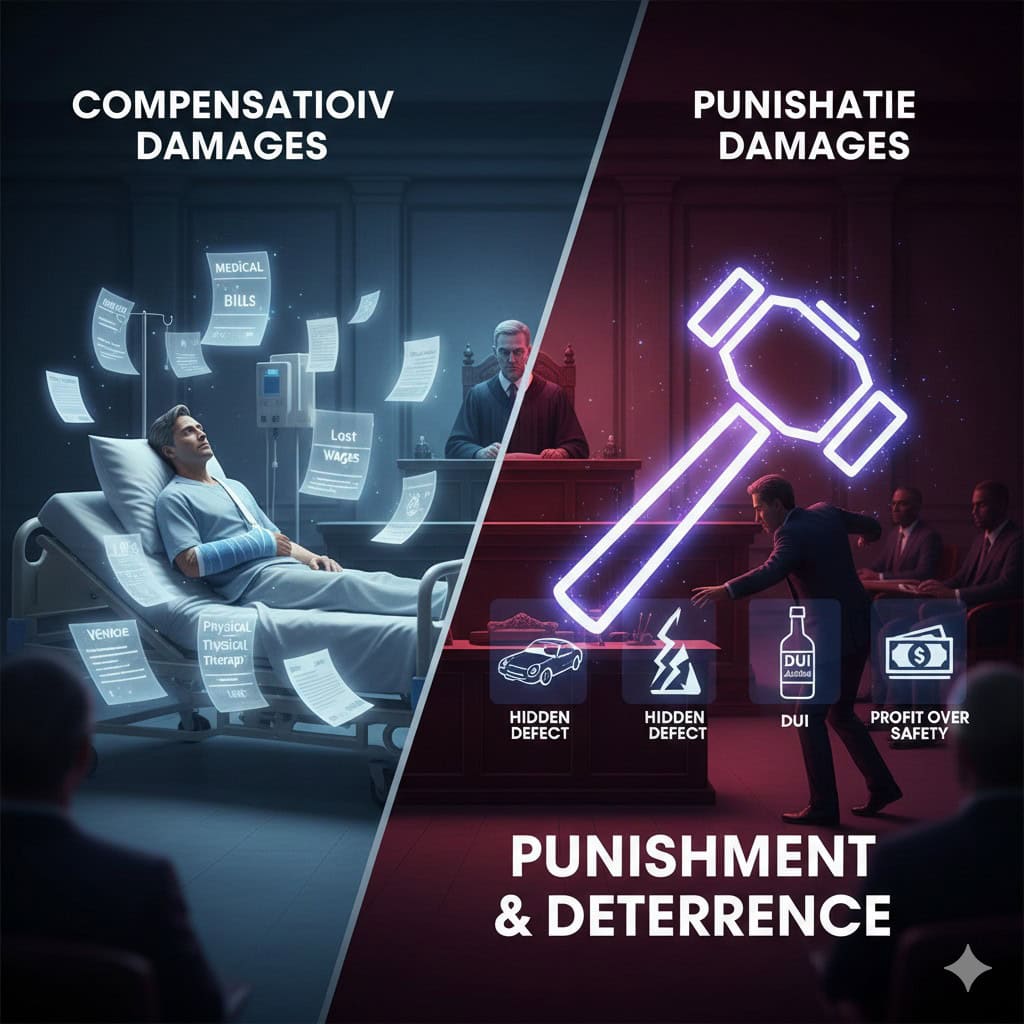
Most civil lawsuits are centered around the concept of restitution, or making the victim whole after a loss. When a person is injured, they seek funds to cover their medical bills, repair their vehicle, and account for their lost wages. It is a system designed to balance the scales of a specific and personal financial debt today.
The focus is typically on the victim’s needs rather than the defendant’s character or specific motivations for their actions. As long as the harm is proven, the court calculates a value that represents the objective and subjective losses sustained during the event. It is a purely compensatory process meant to address the aftermath of a single and very unfortunate moment.
However, there are rare cases where the behavior of the responsible party is so egregious that the standard recovery is considered insufficient. In these specific instances, the legal system moves beyond simple restitution to focus on the concepts of punishment and deterrence. This is where the application of punitive damages becomes a factor in a high stakes legal case.
Punitive damages are not intended to compensate the victim for a specific loss, but to send a clear message that certain conduct will not be tolerated. By imposing a financial penalty beyond actual damages, the court aims to discourage similar behavior in the future and protect the public at large.
Conduct That Triggers Punishment
To qualify for these additional awards, the actions of the defendant must go far beyond simple negligence or a momentary lapse in judgment. Courts look for evidence of “malice,” “willful and wanton” behavior, or a total disregard for the safety of others. It is a level of conduct that suggests the person simply did not care about the consequences of their choices.
Driving under the influence of drugs or alcohol is a common example of conduct that might trigger this type of legal response. By choosing to get behind the wheel while impaired, the driver has consciously decided to put every other person on the road at extreme risk. This intentional disregard for life is what separates these cases from standard accidents.
Corporate decisions to hide known safety defects or ignore hazardous conditions also fall into this category of extreme behavior. When a company prioritizes profit over the lives of its customers, the legal system takes a very dim view of their actions. This conduct demands a response that sends a clear message to the entire industry and the community.
How These Damages Differ
Compensatory damages are strictly about the victim and what they need to return to their pre-accident state of being. They cover the hospital stays, the physical therapy, and the mental health support required for a full recovery. The goal is to ensure the victim is not left with the financial burden of someone else’s mistake today.
Punitive awards shift the spotlight entirely onto the defendant and the specific nature of their wrongful acts. They are not intended to pay for a bill or a repair, but to serve as a financial penalty for the wrongdoer. This punishment is meant to hurt the bank account of the person or company that acted with such recklessness.
By making the cost of negligence higher than the potential profit, the system discourages similar behavior in the future. It acts as a public deterrent that warns others about the consequences of ignoring the basic rules of safety and human decency. This distinction is the core reason why these two types of awards exist in court.
Legal Limits and Standards
The legal system does not allow these awards to be handed out without a very strict set of rules and limitations. Many states have statutory caps that prevent a jury from awarding an amount that is considered excessive or arbitrary. These limits ensure that the punishment remains proportional to the actual harm caused during the event.
The Supreme Court has also established guidelines to ensure that these awards do not violate the constitutional rights of the defendant. Generally, the ratio between the compensatory and punitive amounts must remain within a reasonable range. If the penalty is too high, it may be reduced by a judge after the trial is finished.
These standards are in place to prevent “runaway juries” from making emotional decisions that are not supported by the evidence. The goal is to find a balance between effective punishment and legal fairness for all parties involved in the litigation. Every case is reviewed with a high level of scrutiny to ensure consistency across the board.
Why They’re Rare
These awards are relatively rare because the burden of proof is significantly higher than it is for a standard negligence claim. While a typical case only requires a “preponderance of evidence,” a punitive request often requires “clear and convincing” proof. This means the evidence of extreme recklessness must be very strong and undeniable.
Judges are also hesitant to allow these claims to go to a jury unless the facts are truly extraordinary. They act as gatekeepers, filtering out cases where the conduct was merely negligent rather than malicious or grossly reckless. This restraint ensures that the punishment is reserved for only the most deserving and serious of violations.
Many defendants also choose to settle these cases quickly to avoid the public shame and the risk of a massive verdict. The threat of a public trial often forces a higher settlement offer long before a jury has a chance to weigh in. Because of these hurdles, only a small fraction of cases ever reach this level.
Conclusion
While the primary goal of the civil court system is to help victims heal, the presence of punishment ensures accountability. It provides a mechanism for addressing behavior that is so dangerous it threatens the safety of the entire community. Without these tools, corporations and individuals might find it cheaper to ignore the rules of the road.
Navigating the complexities of these high stakes claims requires a deep understanding of the law and a commitment to the facts. It is a long and difficult path that demands persistence and a steady hand throughout the entire litigation process. The rewards are found in the sense of justice and the protection of the public.
Ultimately, the presence of these damages reminds us that some actions have consequences that go beyond a simple insurance claim. They serve as a vital check on the power of the reckless and the indifferent. By standing up for what is right, victims help make the world a safer place for everyone who shares the road.

