


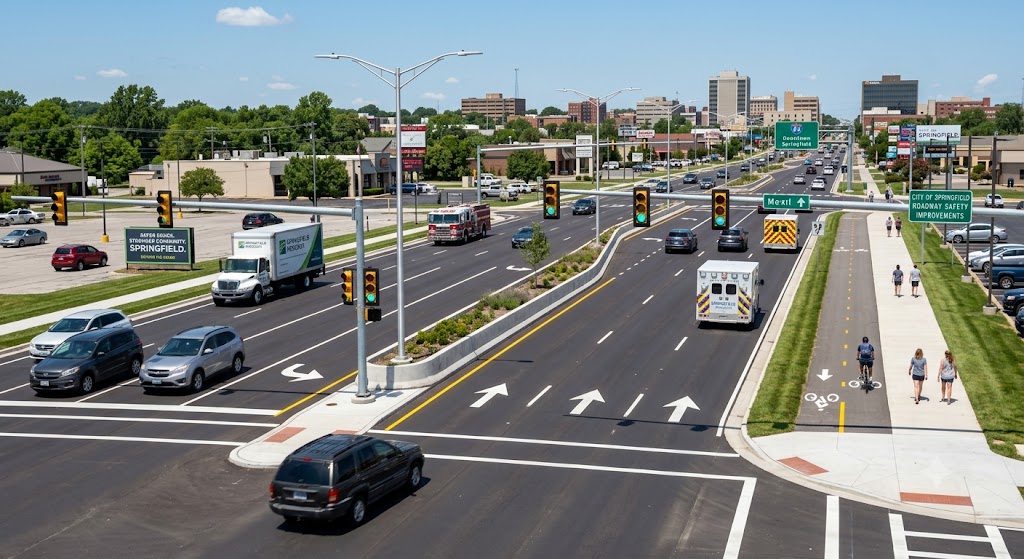
If you have been injured in a collision, speaking with a car accident attorney in Springfield can help you understand your legal rights while you focus on recovery. Serious crashes affect far more than the people directly involved. They disrupt traffic, delay emergency services, interrupt local businesses, and place additional pressure on hospitals and first responders. Every collision reminds us that roadway safety is a shared responsibility that protects the entire Springfield community.
A traffic crash can happen in seconds, but its effects can last for weeks, months, or even years.
One overturned truck on Interstate 44 can bring thousands of vehicles to a standstill. Ambulances may need to take alternate routes, freight deliveries can arrive late, and families trying to reach work, school, or medical appointments suddenly find themselves trapped in congestion. While many people think of road accidents as isolated events, they are often community-wide disruptions that affect transportation, public safety, and the local economy.
Road safety is about much more than avoiding vehicle damage. It is about protecting the systems that keep Springfield moving every day.
“Strong transportation networks are essential to public safety, economic stability, and emergency preparedness.”
Why Roadway Safety Is More Important Than Ever
Springfield continues to grow, bringing more residents, businesses, and visitors onto local roads each year. As traffic increases, so does the need for smarter infrastructure, responsible driving, and effective emergency planning.
Roads such as Interstate 44, U.S. Highway 65, and James River Freeway connect neighborhoods, healthcare facilities, schools, and commercial centers. They also serve as critical transportation routes for freight moving across Missouri and beyond.
When one of these highways becomes blocked because of a major collision, the impact extends well beyond the immediate crash scene.
Traffic quickly shifts onto nearby roads including Sunshine Street, Battlefield Road, Glenstone Avenue, and National Avenue. These roads become congested, emergency response slows, and the risk of secondary crashes increases.
Communities measure resilience not by preventing every incident, but by how effectively they respond and recover.
Every Driver Plays a Role
Modern vehicles include advanced safety technology, yet driver behavior remains the leading factor behind many serious crashes.
Distractions continue to be one of the greatest risks on Springfield roads.
Reading a text message or checking a navigation app for only a few seconds can leave a driver traveling hundreds of feet without paying attention to traffic conditions ahead. Those few moments may be enough to cause a rear-end collision or fail to notice a pedestrian crossing the street.
Speeding creates another major challenge.
Higher speeds reduce reaction time while increasing the force of impact during a collision. Even small increases in speed can significantly raise the likelihood of severe injuries.
Impaired driving also remains a serious concern.
Whether impairment results from alcohol, drugs, or certain medications, reduced judgment and slower reaction times create unnecessary dangers for everyone sharing the road.
Safe driving habits save lives every single day.
Commercial Traffic Adds Additional Challenges
Springfield serves as an important transportation hub for Southwest Missouri.
Large commercial trucks travel Interstate 44 around the clock, carrying products across the Midwest. While these vehicles support the economy, they also present unique safety concerns because of their size and stopping distance.
A fully loaded tractor trailer requires considerably more distance to stop than a passenger vehicle.
Fatigue, equipment failures, overloaded cargo, or distracted driving can all contribute to devastating crashes involving commercial vehicles.
When truck collisions occur, emergency response often becomes more complex due to roadway closures, hazardous materials, or extensive vehicle recovery efforts.
The First Hour Matters Most
The period immediately following a collision often shapes everything that comes afterward.
Medical care should always come first.
Some injuries, including traumatic brain injuries, internal bleeding, and spinal damage, may not produce immediate symptoms. Prompt medical evaluation helps protect both health and future treatment decisions.
Documentation also becomes extremely valuable.
Photographs of the accident scene, damaged vehicles, weather conditions, traffic signals, road markings, and visible injuries may preserve evidence before cleanup crews remove it.
Witness information should be collected whenever possible.
Official reports prepared by local law enforcement, including the Springfield Police Department or the Missouri State Highway Patrol, can provide important factual information that may later support insurance claims or legal proceedings.
Evidence often disappears much faster than people expect.
Security camera recordings may be deleted within days, physical evidence fades, and memories naturally become less reliable over time.
The Financial Impact Reaches Beyond the Crash Scene
The true cost of roadway collisions extends far beyond repair bills.
Medical treatment, physical therapy, prescription medications, lost wages, reduced earning capacity, insurance claims, emergency response expenses, and property damage all contribute to significant financial losses.
According to the National Highway Traffic Safety Administration, motor vehicle crashes cost the United States hundreds of billions of dollars each year through medical expenses, lost productivity, property damage, and emergency services.
For individual families, those numbers become deeply personal.
A single serious collision may result in months of rehabilitation, missed work, emotional stress, and unexpected financial hardship.
Local businesses also experience the effects through delayed deliveries, employee absences, and transportation disruptions.
Accountability Helps Build Safer Communities
When drivers fail to operate vehicles responsibly, legal accountability plays an important role in promoting safer roads.
Missouri follows a pure comparative fault system, allowing injured individuals to pursue compensation even if they share some responsibility for a collision.
This legal framework encourages fair evaluation of the facts rather than placing automatic blame on one party.
Insurance companies may attempt to reduce compensation by arguing that an injured person contributed to the accident.
Accurate documentation, witness statements, professional investigations, and accident reconstruction can help establish what actually occurred.
Strong evidence benefits everyone by supporting a fair outcome.
Infrastructure Matters Just as Much
Road safety depends on more than individual drivers.
Communities benefit when transportation agencies invest in improvements that reduce collision risks before accidents happen.
Examples include improved lighting, better signage, safer intersections, median barriers, rumble strips, protected turn lanes, updated traffic signals, and improved pavement markings.
These improvements may appear simple, yet they have helped reduce serious crashes in communities across the country.
Investment in transportation infrastructure also strengthens emergency preparedness by keeping evacuation routes reliable and improving access for first responders during critical incidents.
“Safer infrastructure protects drivers, pedestrians, cyclists, emergency responders, and local businesses alike.”
Building a Culture of Prevention
Creating safer roads begins long before anyone gets behind the wheel.
Parents teach teenagers responsible driving habits.
Schools provide driver education.
Employers establish safety policies for company vehicles.
Law enforcement agencies encourage compliance through education and enforcement.
Transportation planners evaluate traffic patterns and identify dangerous intersections before additional crashes occur.
Each group contributes to a transportation system that becomes stronger over time.
Public awareness campaigns also encourage drivers to slow down, eliminate distractions, wear seat belts, and avoid impaired driving.
Small decisions made every day collectively produce meaningful improvements in roadway safety.
Looking Ahead
Springfield will continue growing, and with that growth comes increased responsibility.
Population growth means additional vehicles, expanding commercial transportation, and greater demand on local infrastructure.
Preparing for that future requires cooperation between government agencies, transportation planners, law enforcement, healthcare providers, businesses, and residents.
Every safer intersection improves traffic flow.
Every responsible driver reduces unnecessary risk.
Every infrastructure improvement strengthens community resilience.
Every negligent driver held accountable reinforces the importance of safe behavior on public roads.
Roadway safety is not simply about preventing accidents.
It protects emergency response systems, supports economic activity, keeps families connected, and ensures that Springfield remains prepared to respond effectively when unexpected events occur.
A resilient community depends on reliable transportation. By combining responsible driving, modern infrastructure, strong emergency response, and legal accountability, Springfield can continue building roads that are not only efficient but also safer for everyone who uses them.

